If you don’t want to read the full 1,500 words, go to the 479-word TL;DR summary
See also: Stephen Cottrell’s own words — and why they fail basic safeguarding and legal tests
See also: Authority invoked, lessons avoided: what the Archbishop of York’s statement still fails to confront
See also: Archbishop Stephen Cottrell says he has been cleared — but the Tudor case is still under review
And if you want a good reminder of the case, listen to BBC Radio’s original File on Four investigation
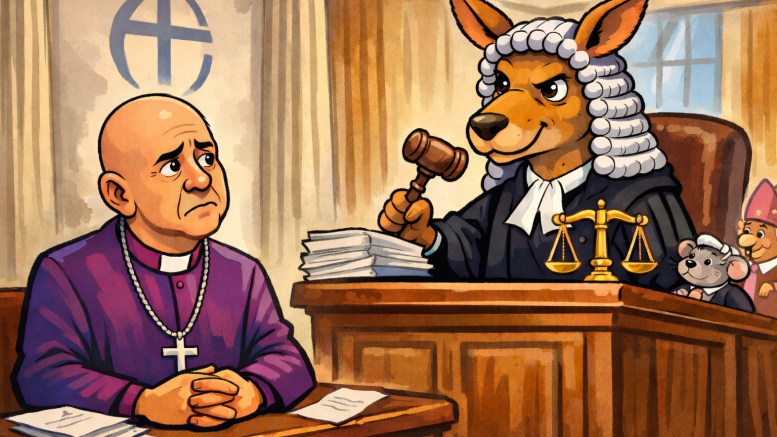
The decision by the President of Clergy Discipline Tribunals to dismiss the complaint concerning the Archbishop of York’s handling of the David Tudor case is not simply unpersuasive. Read carefully, it is unsustainable on the evidence, inconsistent with ordinary judicial reasoning, and fundamentally misaligned with contemporary safeguarding and charity-law standards.
This is not a matter of hindsight, nor of personal animus. It is about governance, accountability, and whether the Church of England’s disciplinary system is capable of responding credibly when safeguarding failures involve senior leaders.
On the evidence, it is not.
A threshold test quietly rewritten
Under the Clergy Discipline Measure 2003, the President of Tribunals must decide whether there is a case to answer. That is a gateway test. Its purpose is to filter out complaints that are frivolous, vexatious, or incapable of amounting to misconduct even if proved — not to determine the merits of contested safeguarding judgments.
Yet in this case the President reformulated the test. He stated that a matter should proceed only if there were a “real prospect”, taking the case at its highest, that a tribunal would find misconduct.
That formulation does not appear in the Measure or in the Clergy Discipline Rules (made by Statutory Instrument). No authority is cited for importing it. And its practical effect is decisive: it allows the President to weigh evidence, assess credibility, and determine reasonableness at the very stage designed to avoid that exercise.
Having raised the bar, the decision repeatedly acknowledges that:
- serious mistakes were made,
- decisions were “regrettable”,
- and the Archbishop “could and should have been more curious”.
Yet it concludes that no tribunal could reasonably find misconduct.
That is not neutral gatekeeping. It is a merits decision, taken by a single office-holder, without the testing, transparency, or adversarial scrutiny that a tribunal exists to provide.
Good faith treated as a shield against accountability
A central strand of the reasoning is that the Archbishop acted “in good faith”, relied on safeguarding advice, and was dealing with an “inherited situation”.
All of that may be true. None of it answers the charge.
In ordinary judicial, regulatory, and safeguarding contexts, good faith does not negate neglect. Senior office-holders are routinely found culpable where they:
- know of a serious risk,
- have authority or influence to mitigate it,
- but fail to act reasonably in light of that knowledge.
Misconduct under the Clergy Discipline Measure expressly includes “neglect or inefficiency in the performance of office”, a statutory definition the President expressly acknowledges, but then undermines in practice by treating good faith as effectively dispositive rather than as one factor to be weighed.
That is not how safeguarding accountability works in the NHS, education, charities, or regulated professions. It should not be how it works here.
Managed risk is not the same as suitability for authority or honour
The most serious flaw in the decision lies in its treatment of status and power.
The President accepts that the safeguarding restrictions imposed on David Tudor were so significant that they demonstrated he was not suitable to minister as an ordinary parish priest. Yet he simultaneously concludes that appointing and reappointing him as Area Dean, and conferring an honorary canonry, could not amount to misconduct because those steps were taken in accordance with policy and safeguarding advice.
That reasoning is incompatible with safeguarding reality.
Safeguarding agreements manage known risk. They do not confer endorsement. They do not render a person suitable for senior roles. And they do not neutralise the safeguarding significance of authority, visibility, and institutional honour.
Senior diocesan offices and honorary canonries are not administratively neutral. They signal trust. They enhance credibility. They expand access and influence. In safeguarding terms, they are risk amplifiers, not incidental decorations.
The assertion that any risk arose solely from Tudor’s parish role — and not from these additional offices — is not a finding grounded in evidence. It is an assumption, and an implausible one.
Speculation substituted for professional curiosity
The decision concedes that a civil settlement in 2012 ought to have prompted greater curiosity, because it suggested the possibility of additional victims.
That concession should have been decisive. Instead, it is neutralised by speculation: the President reasons that if Tudor had been asked further questions, he would likely have denied further offending, and therefore nothing would have changed.
That is not judicial reasoning; it is conjecture.
Safeguarding practice does not excuse a failure to inquire on the basis that the answers might be unhelpful. The duty is to ask, to reassess risk, and to strengthen safeguards when new information emerges — not to assume the outcome in advance.
“Independent judge” — but not institutionally independent
In his separate decision concerning publication, the President described himself as an “independent judge”.
That description is, at best, incomplete.
The President of Clergy Discipline Tribunals is paid by the Archbishops’ Council. The Archbishop of York is not a peripheral figure in that body: he is its chair and president.
This is not an allegation of bad faith. It is a statement of structural conflict of interest. In any other safeguarding or regulatory system, the appearance of independence would be regarded as compromised where a decision-maker is funded by, and institutionally connected to, the leadership of the organisation whose conduct is under scrutiny.
Independence is not only about personal integrity. It is about structure.
Charity law, trustee duties, and neglect of a known structural risk
As Bishop of Chelmsford and later Archbishop of York, Stephen Cottrell occupied roles carrying not only episcopal responsibility but formal charity trustee duties.
He was — and remains — a member of the House of Bishops by virtue of both offices. The members of the House of Bishops are collectively at the heart of safeguarding policy, legislative reform, and governance oversight.
In addition, by virtue of his office as Archbishop of York, he became not only a member, but also the chair and president of the Archbishops’ Council. The Council is the Church’s principal executive charity body. It is responsible for proposing legislation, coordinating safeguarding policy, and bringing draft Measures to the General Synod.
Recent correspondence from the Charity Commission to General Synod members and diocesan bishops make those trustee expectations explicit.
Trustees must not merely respond to individual incidents. They must act where they know of systemic or structural risks that expose beneficiaries to harm.
The David Tudor case revealed exactly such a structural risk. The Archbishop repeatedly relied on the assertion that he had no legal power to remove or suspend a priest in circumstances where serious safeguarding risk was known and accepted.
That difficulty was not theoretical. It affected him directly. It constrained his own decision-making. And it shaped the outcomes in this case.
Crucially, that meant he also knew — or ought to have known — that every other diocesan bishop was subject to the same incapacity in comparable circumstances.
In charity-law terms, this is the decisive point. A trustee who becomes aware of a governance or legal defect that prevents a charity from protecting beneficiaries is expected to take reasonable and proportionate steps to remedy that defect, not merely to accommodate it.
Those steps include escalation, reform, and — where necessary — legislative change.
As a member of the House of Bishops and chair and president of the Archbishops’ Council, Stephen Cottrell was uniquely positioned to act. He could have pressed for, and required the initiation of, draft legislation to be brought before the General Synod to address the inability to remove or suspend clergy in high-risk safeguarding cases. He could have insisted that the structural weakness exposed by the Tudor case be remedied for the whole Church.
He did not.
The likely defences are predictable: that legislation takes time; that responsibility is collective; that safeguarding reform is complex. None withstand scrutiny. Trustees are not required to guarantee outcomes, but they are required to take reasonable steps when serious risks are known. Here, the risk was known, personal, systemic, and ongoing — and the status quo was accepted.
Measured against Charity Commission expectations, that is neglect of trustee duty: knowledge of a serious safeguarding risk combined with a failure to take reasonable steps to eliminate or mitigate it.
A disciplinary system not fit for purpose — and not fixed by reform
This case exposes a deeper truth. The Clergy Discipline system is not fit for purpose in serious safeguarding cases.
Threshold decisions are opaque. Power is concentrated in a single office. Conflicts of interest are structural. And senior leaders are effectively insulated from scrutiny by design.
Nor will this be cured by the proposed Clergy Conduct Measure. Despite changes in language, the critical architecture remains: a powerful president, a high gateway threshold, and limited transparency. In cases like this, the “tribunal” is largely theoretical.
Two unavoidable conclusions
Two conclusions follow inexorably.
First, the Clergy Discipline system — and its proposed replacement — cannot deliver credible accountability in serious safeguarding cases. It is structurally flawed and institutionally defensive.
Second, the position of the Archbishop of York is untenable. Not because of malice or bad faith, but because he presided over — and failed to correct — a system that placed institutional continuity above safeguarding integrity.
Leadership requires more than regret. It requires responsibility.
In this case, responsibility now requires resignation.
TL;DR — Why the Tudor decision matters
A senior Church of England disciplinary decision has concluded that there was “no case to answer” in relation to the Archbishop of York’s handling of the David Tudor safeguarding case. That conclusion does not withstand scrutiny.
The President of Clergy Discipline Tribunals rewrote the legal threshold he was required to apply. Instead of asking whether there was a case to answer — the statutory test in the Clergy Discipline Measure — he applied a stricter, invented standard: whether there was a “real prospect” that a tribunal would ultimately find misconduct. That test appears in neither the Measure nor the Clergy Discipline Rules. It allowed him to decide the merits himself, at the gateway stage, without a tribunal ever hearing the case.
The decision repeatedly acknowledges serious failings: that mistakes were made, that decisions were “regrettable”, and that the Archbishop “could and should have been more curious” when new information suggested the possibility of further victims. Yet it then treats “good faith” as effectively dispositive — a near-complete defence — despite the fact that misconduct under the Measure expressly includes neglect or inefficiency in the performance of office. In safeguarding and regulatory contexts, good faith does not cancel neglect.
Most troubling is the treatment of power and status. The decision accepts that safeguarding restrictions on Tudor were so serious that he was not suitable for normal parish ministry — yet concludes that appointing and reappointing him to senior diocesan roles, and conferring an honorary canonry, could not amount to misconduct.
That reasoning ignores a basic safeguarding principle: status, authority, and honour increase trust and influence, and therefore increase risk. Managed risk is not the same as suitability for leadership.
The President also describes himself as an “independent judge”, but the office is funded through the Archbishops’ Council, which is chaired and presided over by the Archbishop of York. That is not an allegation of bad faith, but it is a clear structural conflict of interest that would be unacceptable in most safeguarding or regulatory systems.
Finally, the case exposes a deeper governance failure. As Bishop of Chelmsford and later Archbishop of York, Stephen Cottrell knew that bishops lacked effective legal powers to remove clergy in high-risk safeguarding cases. That problem affected him directly. It also affected every other bishop. As a senior charity trustee and chair of the Church’s main executive body, he was in a position to press for legislative reform to fix that defect. He did not. Under Charity Commission standards, knowingly accepting a serious, systemic safeguarding risk without taking reasonable steps to remedy it amounts to neglect of trustee duty.
Two conclusions follow. First, the Church’s disciplinary system is not fit for purpose in serious safeguarding cases — and proposed reforms will not fix that. Second, the position of the Archbishop of York is untenable. Not because of malice, but because accountability, safeguarding credibility, and public trust now require responsibility to be taken.





Leave a comment